Blog
The Digital Exhibit blog explores the intersections of museum education, computer science education, digital literacy, storytelling, creativity, and inquiry-based learning. Through essays, reflections, educational experiments, program development, and teaching resources, the DE documents an evolving approach to making computer science education more accessible, engaging, and developmentally meaningful for early learners and communities.
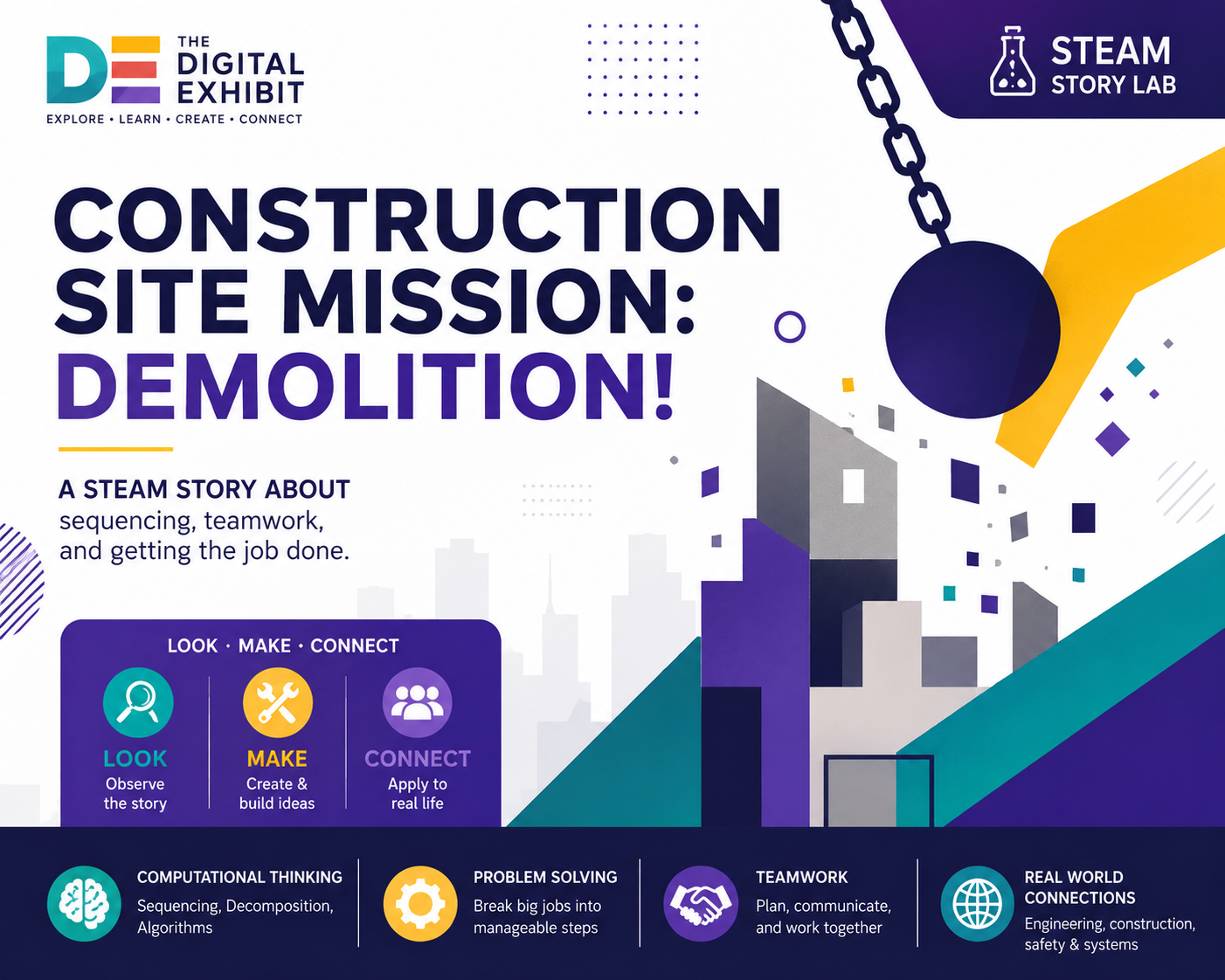
The Airport Book by Lisa Brown
A STEAM Story Lab Review
Airports are full of systems, routines, signs, schedules, and step-by-step processes—which makes The Airport Book by Lisa Brown a surprisingly strong introduction to early computer science concepts for young learners.
Through playful illustrations and simple storytelling, the book walks readers through the experience of traveling through an airport: checking bags, moving through security, waiting at the gate, boarding the plane, and arriving at a destination. Each event happens in a sequence, helping children naturally recognize patterns, order, and instructions.
At The Digital Exhibit’s STEAM Story Lab, we use stories like The Airport Book to introduce foundational concepts such as:
Sequencing
Algorithms
Systems thinking
Following instructions
Cause and effect
What makes this book especially effective is how grounded it feels in real life. Children can connect the story to their own travel experiences while learning that computers and programs also follow ordered steps to complete tasks.
Lisa Brown’s illustrations are warm, observant, and filled with details that encourage curiosity and discussion—making this an excellent choice for classrooms, libraries, museums, homeschool families, and early STEM programs.
Perfect for:
Early childhood STEM • Computer science education • Story-based learning • Museum education • STEAM literacy
Construction Site Mission: Demolition! — A STEAM Story Lab Book Review
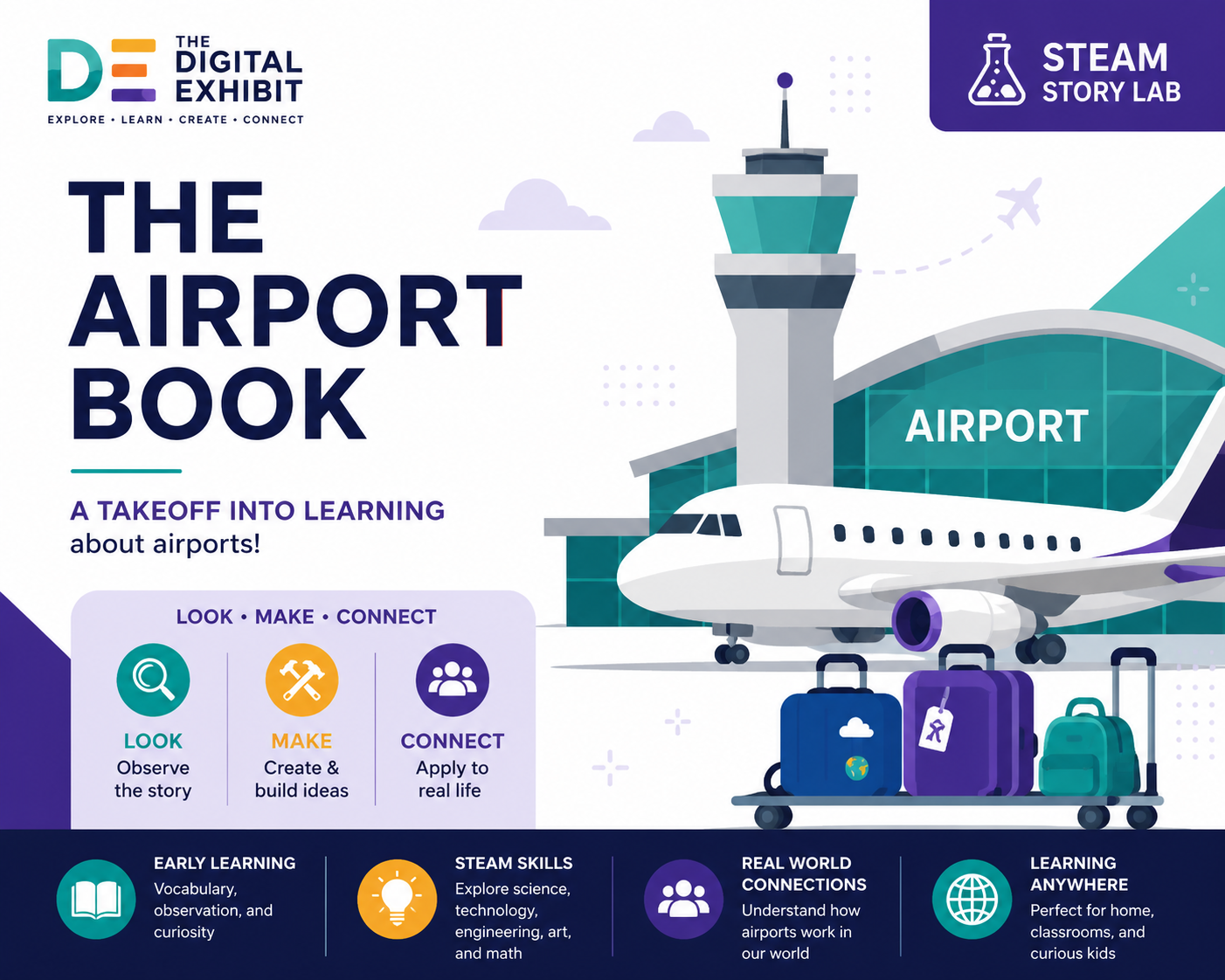
If you’re looking for one of the best children’s books for teaching sequencing, algorithms, and early computational thinking, Construction Site Mission: Demolition! is an excellent choice for young learners.
This engaging construction-themed story follows a team of hardworking trucks as they carefully complete the steps needed to demolish a building safely and in order. Through rhythmic storytelling, detailed illustrations, and action-packed scenes, children naturally begin to understand that big jobs happen one step at a time — a foundational idea in both engineering and computer science education.
At The Digital Exhibit’s STEAM Story Lab, we use our LOOK – MAKE – CONNECT framework to transform storybooks into hands-on learning experiences:
LOOK → Observe the story closely, identify patterns, and notice the sequence of events.
MAKE → Recreate the story through sorting cards, building activities, drawing, or storytelling.
CONNECT → Relate the book’s ideas to real-world systems like construction, cooking, routines, and coding.
This book is also a fantastic introduction to decomposition, an important computer science concept where large problems are broken into smaller, manageable steps. In the story, demolition is not treated as one giant action — instead, the trucks complete specific tasks in a sequence to accomplish the larger mission safely and successfully. Young learners begin to understand that solving complex problems requires planning, teamwork, and organized steps.
Perfect for:
Early childhood STEAM education
Preschool and elementary classrooms
Screen-free computer science learning
Storytime engineering activities
Sequencing and algorithm lessons
Construction-themed learning units
If your child loves trucks, building, and hands-on activities, this story is a powerful way to introduce early coding and problem-solving concepts through literacy and play.
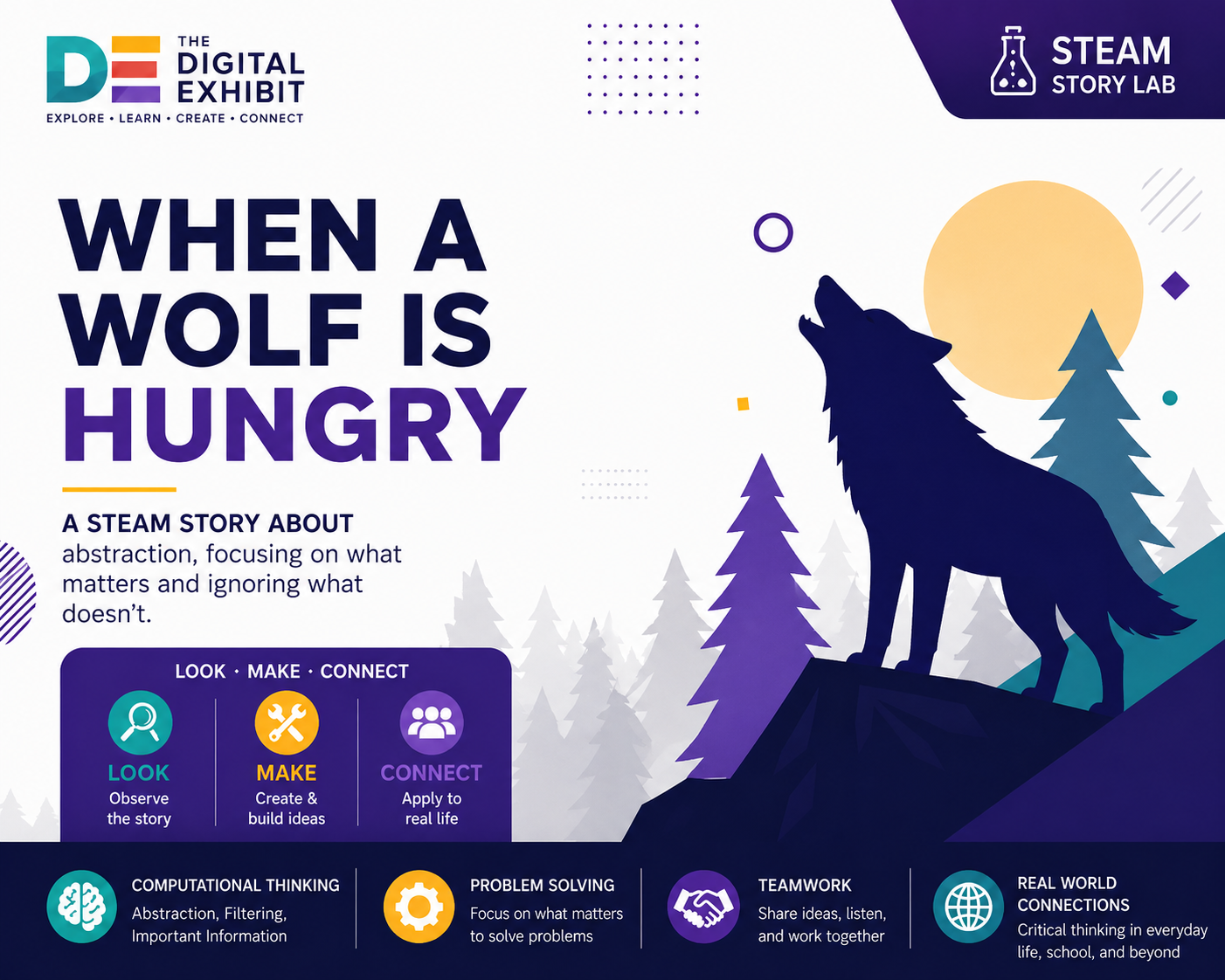
When a Wolf Is Hungry by Kris Di Giacomo: A Clever Children's Book for Teaching Abstraction and Problem Solving
If you're looking for a children's book that naturally introduces problem-solving, critical thinking, and early computational thinking, When a Wolf Is Hungry by Kris Di Giacomo is a fantastic choice.
At first glance, this charming picture book appears to be a simple story about a hungry wolf searching for a meal. But as the story unfolds, young readers quickly discover that solving problems isn't always as straightforward as it seems. The wolf must make decisions, focus on what matters, and navigate unexpected situations along the way.
For educators and families exploring computer science concepts with young children, this story is an excellent introduction to abstraction—the computational thinking skill of identifying important information while ignoring distractions.
Throughout the story, children can ask:
What is the wolf's real problem?
Which details are important?
Which details are distractions?
How do the wolf's choices affect the outcome?
These questions encourage young learners to think like problem solvers while developing literacy, comprehension, and social-emotional skills.
At STEAM Story Lab, we pair When a Wolf Is Hungry with our LOOK • MAKE • CONNECT framework:
🔍 LOOK – Observe the story and identify what matters most.
🛠️ MAKE – Sort information into "important" and "not important" categories through hands-on activities.
🌎 CONNECT – Explore how we use abstraction every day when solving problems, following directions, learning new skills, and making decisions.
With its engaging illustrations, humor, and opportunities for discussion, When a Wolf Is Hungry is a wonderful addition to any classroom, library, homeschool, or family bookshelf.
Perfect for: Early childhood educators, librarians, homeschool families, STEAM programs, and anyone interested in introducing computational thinking through children's literature.
Skills explored: Abstraction, critical thinking, problem solving, literacy, discussion, and decision making.
Have you read When a Wolf Is Hungry? We'd love to hear how your young learners interpreted the wolf's journey.